
苏州话

Digital Preservation of Suzhounese as a Wicked Problem

▶ 点击聆听 / Touch to hear

A language disappears every two weeks. Most leave no trace.

每两周,世界失去一门语言。大多数,悄无声息。

On the failure of digital language preservation · Suzhounese as case study

A city of 12 million people.
A language spoken by almost no one under 30.

Linguists estimate that roughly half the world's 7,000 languages will be gone by 2100 — not from disaster, but because children stopped speaking them. The pattern is almost always the same: a dominant language brings economic opportunity; schools switch; parents stop passing the old tongue on; and within a generation, something that took centuries to develop simply stops. We know this pattern well. The harder question is what happens when we try to stop it.

The reasons Suzhounese — the dialect of Suzhou (苏州话), used interchangeably with "Suzhou dialect" throughout this page — is disappearing: Mandarin-first education policy, economic migration, the collapse of intergenerational transmission. These are documented in linguistics journals, cultural essays, and government reports. This page is about something else: why saving it keeps failing. Government programs, AI speech tools, community archives, school curricula — every serious intervention has produced partial results and new problems. In a single generation, youth fluency has collapsed from near-universal to near-extinct,[1] and the efforts to stop that collapse have, collectively, not stopped it. That turns out to be a structural problem with a name.

~12M

people in Suzhou city proper — essentially none are raising children in the dialect

95%→2%

estimated drop in youth fluency across one generation, 1980s to present[1]

7

distinct tones — vs. Mandarin's 4 — making digital preservation technically hard

To start with, let's introduce the geocultural setting in which Suzhounese sits and what is "wicked problem":

What is Jiangnan — and why does it matter? "Jiangnan" (江南) means "south of the [Yangtze] River" — the region that today encompasses Shanghai, Suzhou, Hangzhou, and Nanjing. For over a thousand years, this was the cultural and intellectual capital of China, in the way that Renaissance Florence or Elizabethan London dominated their respective worlds. It produced the majority of China's imperial examination scholars, its finest silk and porcelain, its most celebrated poets and painters. The Chinese proverb still taught to every schoolchild: "Above is paradise; below are Suzhou and Hangzhou." When Marco Polo passed through in the 13th century, he called it the greatest city on earth.

Suzhounese: the prestige dialect of Jiangnan. Within Jiangnan, Suzhou set the cultural standard. The saying — "what the people of Suzhou consider elegant, the whole world considers elegant" — was not poetic license. Suzhounese was the prestige dialect of the entire region: its sound was associated with refinement, scholarship, and taste. Kunqu opera — performed entirely in Suzhounese, and recognized by UNESCO as a Masterpiece of Intangible Heritage in 2001[3] — was born here precisely because Suzhounese was the language of high culture. Understanding the dialect was a mark of cultivation across the whole Yangtze Delta, not just for Suzhou locals. Linguistically, Suzhounese belongs to the Wu Chinese (吴语) language family — a branch of Chinese as distinct from Mandarin as Spanish is from Portuguese, spoken by roughly 80 million people across the Yangtze Delta. Shanghainese is also Wu Chinese, but the two varieties differ significantly in phonology, vocabulary, and tone system. This distinction matters more than it might seem: because Shanghainese has far greater web presence and sits structurally closer to Mandarin, most AI systems treat the two as interchangeable — with real consequences for every corpus assembled in the name of "Wu dialect" preservation. Siri cannot understand Suzhounese. Most speech-to-text tools don't know it exists.

What's a "wicked problem"? A concept from design theory (Rittel & Webber, 1973) for a class of problems that resist rational-technical solutions — not because of insufficient effort or resources, but because the problem keeps changing shape as you try to address it, there is no agreed definition of "solved," and every intervention introduces new complications. Language preservation is a textbook case. This page is not about why Suzhounese is dying — that story has been told. It is about why stopping it is so structurally hard.

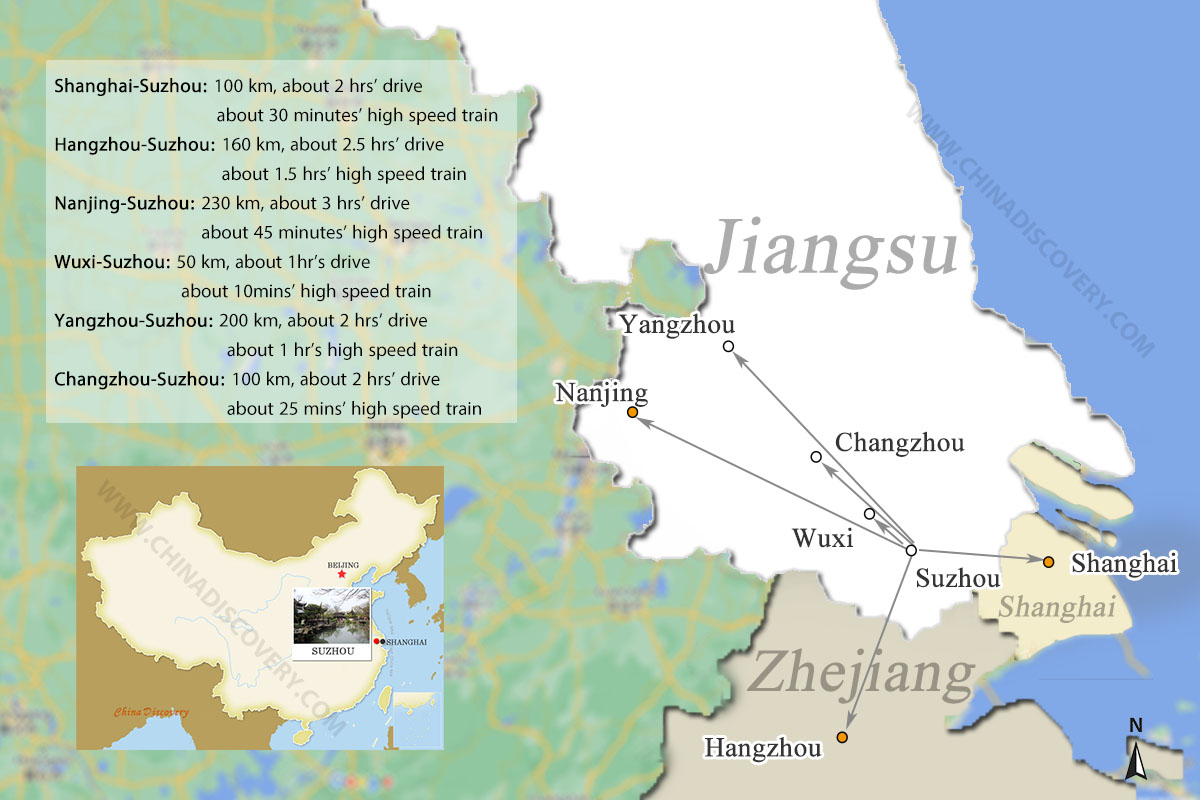
Map showing Suzhou's location in Jiangsu Province, near Shanghai
Suzhou, Jiangsu — ~100 km west of Shanghai.[11]
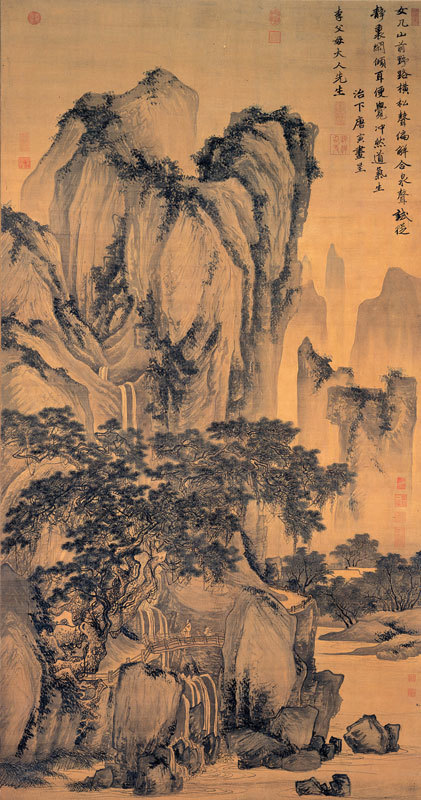
Tang Yin, Mountain Road with Sound of Pines, Ming dynasty ink painting
Tang Yin (唐寅), Mountain Road with Sound of Pines. Ming dynasty, Suzhou school. Image: Epoch Weekly.
Suzhou embroidery (苏绣), intricate silk needlework
苏绣 Suzhou embroidery — one of China's four great embroidery traditions, originating in the Suzhou region. Image: Baidu Baike.
Kunqu opera performance of The Peony Pavilion in traditional costume
Kunqu opera — The Peony Pavilion. Its entire phonological system depends on Suzhounese.[13] Image: China Xian Tour.

What this page argues

The problem isn't that nobody is trying.
The problem is that trying keeps making it harder.

Language preservation is a wicked problem — a term from design theory for challenges where every intervention changes the problem itself, where there is no clear definition of "solved," and where well-intentioned solutions reliably produce new complications. This is not a metaphor. It is a structural diagnosis. School programs create a formal register that sounds nothing like a living dialect. Archives preserve sound without preserving speakers. AI tools trained on the wrong data build models that encode the wrong language. Standardization creates an artifact that no native speaker fully recognizes. Suzhounese is the case study — specific enough to examine in detail, representative enough to generalize from. The patterns here recur in every seriously documented language preservation effort. This page maps them.

BEFORE YOU DIVE IN

读之前

Why This Should Concern You

这件事,为什么与你有关

Whoever brought you here — the answer might be different depending on who you are. Find yourself below.

不管是什么把你带到这里——答案因人而异。在下面找到你自己。

Curious Reader

好奇的读者

If you simply followed a link and aren't sure why you're here

如果你只是点进了一个链接,还不确定为什么

The real question on this page isn't "why is this language disappearing?" It's "why, with everything we know about how to preserve things, can't we stop it?" That turns out to be a genuinely fascinating problem — one that reveals something about the limits of expertise, policy, and technology that goes far beyond linguistics.

这页真正的问题不是"为什么这门语言在消亡",而是"为什么,在我们已经掌握这么多保护手段的今天,还是阻止不了它"?这是一个真正迷人的问题——它揭示了专业知识、政策与技术的边界,远不止于语言学本身。

Start reading → 开始阅读 →

Native Speaker · Local Community

母语者 · 本地社区

If you grew up hearing Suzhounese at home

如果你从小在家里听过苏州话

Even if you can no longer speak it fluently, you already know what this page is documenting. What you felt was a quiet, private loss is measurable, named, and shared by thousands of families. And your voice — literally — is the most valuable thing the record is missing.

哪怕你现在已经说不流利,你早已知道这页在记录什么。那种悄悄的、难以言说的失落感,是可以被测量的,有名字的,也是数千个家庭共同经历的。而你的声音——真正的声音——正是这份记录最需要的。

Contribute a recording → 录制你的声音 →

Chinese Diaspora

海外华人

If your grandparents spoke a dialect you never quite learned

如果你的祖父母说着一门你始终没学会的方言

60% of second-generation Chinese overseas cannot speak their parents' dialect fluently. This is not a personal failure — it is a documented structural pattern. The guilt and grief that comes with it has a name, and this page traces exactly where it comes from.

海外第二代华人中,60%无法流利使用父母的方言。这不是个人的失败,而是一种有据可查的结构性规律。伴随而来的愧疚与失落有其名字,这页追溯了它的根源所在。

Listen to three generations → 听三代人的声音 →

Linguist · Researcher

语言学家 · 研究者

If you study endangered languages or language documentation

如果你研究濒危语言或语言记录

Suzhounese preserves the full voiced obstruent series from Middle Chinese — sounds lost in Mandarin a millennium ago — alongside a seven-tone system with register conditioning that exists nowhere else at this speaker scale. This page maps the complete wicked problem structure for the case, citable and synthesized.

苏州话保留了中古汉语的全套浊阻音——这些发音在普通话中已消失千年——以及在同等规模的语言中绝无仅有的七声调加语域调节系统。本页对这一棘手难题案例进行了完整的框架梳理,可直接引用。

See the preservation timeline → 查看保护时间线 →

NLP Engineer · Computational Linguist

NLP工程师 · 计算语言学家

If you build speech or language AI tools

如果你从事语音识别或低资源NLP

Suzhounese is a maximally hard case for speech recognition AI: seven tones, a set of consonants absent from every Mandarin-trained model, and tone changes that can only be decoded at the phrase level — not syllable by syllable. This page explains precisely why throwing more data at the problem doesn't solve it — and where the 2024 WenetSpeech-Wu dataset leaves the field.

苏州话是调值最复杂的语音识别难题之一:七个声调伴随发声类型调节、全套浊阻音在所有普通话训练模型中均无表示、短语级复杂连读变调。本页精确解释了为什么语料库规模无法单独解决这些问题,以及2024年WenetSpeech-Wu发布后该领域的现状。

See the three challenges → 查看三大挑战 →

Cultural Heritage Professional · Policymaker

文化遗产从业者 · 政策制定者

If you work in intangible heritage or language policy

如果你从事非物质遗产或语言政策工作

Kunqu opera is a UNESCO Masterpiece whose phonological foundation is Suzhounese. Policy that preserves the performance while the dialect disappears is preserving a form without its substrate — a coherence problem any heritage institution should recognize. This page also traces the structural contradiction inside China's own language policy framework.

昆曲是联合国教科文组织认定的人类遗产,其音韵基础正是苏州话。保住演出形式却让方言消亡,是在保存没有底层基础的外壳——任何文化遗产机构都应认识到这一逻辑矛盾。本页也梳理了中国自身语言政策框架内的结构性矛盾。

See the policy timeline → 查看政策时间线 →

You don't have to fit neatly into one card. Most readers don't.

你不必只符合其中一张卡片。大多数读者都不止一面。

§ 01

苏州话,离你有多远?

你听得懂,但你会说吗?

你的孩子将来会问你:外婆说什么?
你会翻译给他听。
但那个味道,那个语气,
那种只有苏州人才懂的弯弯绕绕——
翻译不了。

§ 02

三代。三十年。

以下片段用于非营利学术与文化保护目的。视频通过原平台嵌入播放,不作二次分发。 如有版权疑问,请通过页面底部联系方式与我们联系。

第一代 · 旧时代苏州话 邵氏电影《乾隆下扬州》· 1978

「片中女子虽是评弹出身,但这段展示的是旧时代苏州人的日常口语——字字入声,韵味天然。这不只是语言,也是一段文化地位的记忆。明清时期,"苏人以为雅者,则天下雅之"。嘲笑乾隆听不懂苏州话的,是扬州酒馆里的一个小二;台子底下跟着起哄叫好的,是一群扬州本地的纨绔子弟。江南一带,能听懂苏州话,是身份,是品位,是荣耀。」

© 邵氏兄弟(香港)有限公司,1978。选段用于非营利学术展示,依据合理使用原则。[10] 合理使用

第二代 · 八零/九零后 施斌 · 西周婚礼风俗 · 苏州电视台

「苏州电视台主持人施斌以苏州话讲述西周婚礼风俗。苏州话还在——但普通话词汇与节奏已悄然渗入。这一代是方言与普通话共存的过渡层。」

© 苏州广播电视总台,节目片段由苏州电视台上传至 YouTube。选段用于非营利学术展示。原视频:youtube.com/watch?v=tUgIFfOU2FA[12] 合理使用

第三代 · 零零后 2024–2025年录制

「能听懂,也能说出几句,但语调和词汇量已大幅萎缩。这不是懒惰,是一整个语言环境的消失——学校、媒体、同龄人,全是普通话。」

本人录音,版权归作者所有,授权本页使用。 自有版权

三代之间,语言的传承断了。

§ 03

苏州话,为什么特别?

苏州话之所以难以数字化保存,恰恰是因为它在语言学上格外精密。以下三个特征,是任何保护方案都必须面对的挑战。

七个声调

普通话有四个声调。苏州话有七个,包括两个以喉塞音收尾的"入声"——这在普通话里早已消失。

普通话(4调)

苏州话(7调)

连读变调

一个字单独念和放在词组里念,声调完全不同。这个规则贯穿全句,让任何语音识别模型都难以处理。

单读: 阴平
今朝 今 变调,朝 跟随
今朝天气 调域扩展,规则更复杂

保留浊音

普通话里消失了一千多年的浊辅音,在苏州话里依然活着。这是中古汉语的"活化石",也是AI训练数据里最难处理的特征之一。

苏州话有 / 普通话无:

/b/ /d/ /g/ /v/ /z/

这些音素在普通话训练语料中几乎不存在,导致模型系统性地识别错误。

比普通话更丰富的元音系统

苏州话包含普通话中完全没有的圆唇前中元音,如/ø/,与法语"feu"中的发音相似,展现了吴语保留古汉语特征的独特性。

简化国际音标元音梯形图。青色圆点为苏州话特有元音,灰色为与普通话共有元音。 /i/ /u/ /e/ /o/ /a/ /y/ /ø/ 吴语特有 共有

昆曲与评弹的音韵根基

明代音乐家魏良辅以苏州方言腔调为基础创制了昆山腔,成为昆曲的标准音。评弹至今必须用苏州话演出——换了语言,艺术便不复存在。

昆曲 评弹 非物质文化遗产

还有第四重困难:被误认。 苏州话和上海话同属吴语(Wu Chinese),但两者语音系统差异显著。由于上海话在网络上留存更多、与普通话在结构上更接近,AI模型更容易"学会"上海话。数据爬取时,大量苏州话内容被错误标注为上海话;训练出来的所谓"吴语模型",实质上往往是以上海话为主导的系统。本就稀少的苏州话语料,在进入数据集之前就已经被系统性地污染了。

§ 04

为什么"教一教"就解决不了?

遇到语言危机,人们的第一反应通常是"那就教吧"。于是有了学校课程、学习App、政府录音工程——每一个方案都有其逻辑,也都部分失败了。以下四个案例说明为什么。

学校开设方言课

课上教的是"标准苏州话"——发音准确,语调规范。但同学们说,听起来像播音员,不像邻居。

✗ 学了,但不会用

开发了学习App

用户数据很好看。但调查发现,用过App的人在生活中说方言的比例并没有上升。

✗ 会认,但不会说

政府录音存档

建立了珍贵的语音数据库。但录音躺在服务器里,没有人在用它们和下一代对话。

✗ 保存了声音,没保存语言

苏州话没有统一的书写系统

想打"煞煞好",哪个字?每个人写法不一样,词典里查不到,输入法也不认识。没有文字,就没有教材;没有教材,数字化工具从何建起?方言的书写问题不是支线——它是整个难题的结构性根基之一。

✗ 说得出,写不下来

每一个办法,都解决了一个问题,同时带来了新的问题。这就是为什么它很难。

§ 05

为什么这是一个"棘手难题"?

研究者把那些"越解决越复杂"的问题称为"棘手难题"(Wicked Problem)。苏州话的保护,正是其中之一。以下四个维度,说明了为什么。

问题的复杂性

没有单一原因,也没有单一解法

语言政策、经济逻辑、人口迁移、数字媒体——这些力量相互叠加,牵一发而动全身。

语言政策 经济逻辑 人口迁移 数字媒体 教育体制
解决方案的失效

每一次干预,都在改变问题本身

好的出发点,也可能带来意外的后果:

  • 开方言课 → 催生"正式苏州话",不像真正的日常口语
  • 建数字档案 → 声音被保存,但没有人在用它交流
  • 推标准化 → 保存的是人工构建的版本,不是活的方言
利益冲突

各方都想保护,但想法截然不同

对"怎么保"的分歧,往往比"要不要保"更深:

语言学家vs科技公司:自然变体 vs 标准化数据

中央政府vs本地社区:推广普通话 vs 方言文化自主

老一辈vs年轻人:语言纯正 vs 自然演变

本地人vs新苏州人:方言认同 vs 被排斥感

共同的关切

分歧之中,有五件事大家都认同

这是所有对话的起点:

  • 没有人真心希望苏州话消失
  • 下一代对所有人都很重要
  • 文化认同值得保护
  • 现有录音弥足珍贵
  • 留给行动的时间正在减少

你现在能做什么?

倷好 (nǎi hǎo) — 你好

§ 01

Three generations.
Thirty years of change.

Before the data and the arguments, let's have a intuitive impression by feeling it ourself. The three clips below are all in Suzhounese — the same dialect, representing roughly forty years apart. You don't need to understand the words. Feel the rhythm, the texture, the feel of the sounds. Then get a rough idea of what happens to that sound across generations. English subtitles are available in the video player.

Generation 1 · Suzhounese as it was spoken Shaw Brothers · 乾隆下扬州 · 1978

The woman in this clip is a Pingtan performer by trade, but what you are hearing is not a staged performance — it is how Suzhou people simply talked. For centuries, Suzhou set the cultural standard for the entire Yangtze Delta: the saying went, "What the people of Suzhou consider elegant, the whole world considers elegant." In this clip, Emperor Qianlong visits Yangzhou and cannot understand the woman — and gets mocked for it by a tavern waiter, while the local Yangzhou dandies watching from the floor cheer and jeer along. The joke lands because understanding Suzhounese was a point of pride across the whole Jiangnan region — not just for Suzhou locals, but for anyone who considered themselves cultured. "A Shandong man eating 麦冬 — doesn't understand a thing." (Pun: 麦冬/mài dōng ≈ 没懂, "understood nothing.")

© Shaw Brothers (HK) Ltd., 1978. Excerpt used for non-commercial academic purposes under fair use.[10] Fair use

Generation 2 · Millennial speaker Shi Bin · Suzhou Television · 2020s

Shi Bin (施斌) is a host at Suzhou Television, whose shows are all entirely in Suzhounese — a deliberate and increasingly rare choice. This clip, originally broadcast by Suzhou TV and later uploaded to YouTube, covers Western Zhou dynasty wedding customs. Listen for the same tonal richness as the first clip, but also notice Mandarin vocabulary and rhythms creeping in. This generation grew up bilingual; the dialect survived, but it changed.

© Suzhou Radio and Television Group. Clip uploaded to YouTube by Suzhou TV. Excerpt for non-commercial academic use. Source: youtube.com/watch?v=tUgIFfOU2FA[12] Fair use

Generation 3 · Post-2000s speaker Recorded 2024–2025

The author's own voice — part of the generation that grew up hearing Suzhounese from grandparents but schooled entirely in Mandarin. Can understand it, can say some phrases, but the full vocabulary and tonal instinct are gone. Not from lack of interest. From lack of environment.

Original recording by the author. All rights reserved. Own work

Across three generations, the thread of transmission broke.

§ 02

Three forces working against preservation

The difficulty of preserving Suzhounese isn't a single problem — it's at least three, operating at the same time and reinforcing each other. Click any node to explore.

Click any node to explore the forces at work.

§ 03

The recordings keep growing.
The speakers don't.

Speech recognition accuracy on Wu dialect has improved measurably in the past five years — driven partly by the release of the WenetSpeech-Wu dataset, a large collection of recorded Wu speech (a corpus) assembled for training AI models. At the same time, the population capable of producing natural, unscripted Wu speech has declined. The tools are getting better at preserving an artifact of something that is ceasing to exist as a living system.[5]

  • 01

    Corpus completeness failure

    Age, geographic, and register bias in recordings

  • 02

    Social context collapse

    Isolated phoneme data without pragmatic/conversational structure

  • 03

    Transmission failure

    No mechanism connecting preserved data to speaker communities

  • 04

    Definition failure

    Conflating documentation with revitalization

  • 05

    Label contamination

    Suzhounese and Shanghainese are both Wu dialects, but Shanghainese has far greater online presence and sits structurally closer to Mandarin — making it easier for Mandarin-trained models to handle. AI scrapers routinely mislabel Suzhounese content as Shanghainese. The result: a model trained on "Wu dialect" data may be learning mostly Shanghainese, with Suzhounese either diluted into the noise or systematically misclassified from the start.

2000 2005 2008 2010 2013 2015 2017 2020 2022 2024 2025 0% 10% 20% 30% 40% 50% 60% 0% 20% 40% 60% 80% 100% WenetSpeech-Wu released 2025 8% (survey, 2008) 2.2% (Jiangsu TV) Youth fluency rate (%) ASR error rate — CER% (lower = better) Youth fluency (% under 20s speaking Suzhounese fluently) Wu dialect ASR error rate (CER%; ↓ = improving recognition)
Youth fluency data: Jiangsu TV survey (2020, 2.2%); China News Service / Pingjiang survey (2013, ~5%); Sohu/media survey (2008, 8%). ASR baseline from WenetSpeech-Wu paper (arXiv:2601.11027, Jan 2026): Paraformer on Wu ~67% CER (2019), Tencent Cloud ~25% CER (2024), Whisper-medium-Wu ~11% CER (2025). Early-period ASR estimates extrapolated from published Chinese dialect ASR literature. Projected 2025 fluency (~1.5%) based on trendline.

§ 04

Why speech software struggles with Suzhounese

Before the social problem, there is a purely technical one. Three features of Suzhounese make it resistant to standard speech AI pipelines — and understanding them clarifies why having more recordings alone does not solve the problem.

7-tone system vs. Mandarin's 4

Suzhounese preserves five unchecked tones and two checked tones (入声, 'entering tones') with a glottal stop offset — lost in Mandarin ~1,000 years ago. Mandarin-trained acoustic models have no representation for these phoneme classes.

Mandarin (4 tones)

Suzhounese (7 tones)

Tones shift depending on neighboring syllables

In Suzhounese, the tone of a syllable changes based on what surrounds it — a phenomenon called tone sandhi. Specifically, the first syllable of a phrase sets a "tone key" that overwrites all syllables to its right. AI speech systems built on Mandarin — where tones are fixed per syllable — have no architecture for this; they must understand the whole phrase before decoding any individual sound.

alone: tone 1 (yin-ping)
今朝 今 shifts; 朝 follows
今朝天气好 full domain spread; all 5 syllables affected

Sounds that Mandarin erased — still alive here

Suzhounese preserves a set of consonants — /b, d, g, v, z/ — produced with the vocal cords vibrating (called voiced obstruents). Mandarin lost these roughly a thousand years ago. Every speech AI trained on Mandarin hears these sounds and guesses wrong, because it has never been trained to recognize them at all. With almost no examples in existing training data, error rates spike.

Present in Suzhounese / absent in Mandarin:

/b/ /d/ /g/ /v/ /z/

Plus: 4 competing romanization systems with no official standard — annotation inconsistency is structural.

Richer Vowels than Mandarin

Suzhounese includes rounded front mid vowels like /ø/ — sounds absent from Mandarin entirely. These are the same vowel sounds found in French 'feu' or German 'schön'.

Simplified IPA vowel trapezoid. Teal circles indicate vowels distinctive to Wu/Suzhounese; grey circles indicate vowels shared with Mandarin. /i/ /u/ /e/ /o/ /a/ /y/ /ø/ Wu-distinctive Shared

Foundation of Two UNESCO Arts

Kunqu opera (UNESCO 2001) and Pingtan storytelling were built on Suzhou phonology. Wei Liangfu explicitly chose Suzhou accent as Kunqu's phonological standard in the Ming dynasty.

Kunqu 昆曲 Pingtan 评弹 UNESCO 2001

§ 05

You probably cannot solve this problem.

You can only make better or worse interventions.

In 1973, Rittel and Webber introduced the concept of the "wicked problem" — a class of challenges that resist rational-technical solutions because the problem itself keeps changing shape as you try to address it.[2] Language preservation is one.

Property In Suzhou Dialect Preservation
"Preservation" means archiving to a linguist, community vitality to a parent, clean training data to an engineer, and cultural identity to a 25-year-old in Shanghai. These are not variants of the same goal.
There is no agreed threshold. The PASSCo framework (2024) implicitly acknowledges this by treating preservation as perpetual institutional coordination rather than a target to reach.
Teaching Suzhounese in schools produces speakers who "sound like news anchors, not neighbors." The formal register created by pedagogy didn't exist before — the intervention changed what was being preserved.
With approximately 2.2% of Suzhou teenagers reporting fluency, and the figure still declining, the cohort of native speakers capable of natural first-language transmission is aging out. Each year of delay forecloses options that cannot be reopened.
Standardizing the dialect for NLP pipelines marginalizes natural variation. Any canonical version is a constructed artifact. The model trained on "Suzhounese" may be encoding something no living speaker fully recognizes.
Chinese characters encode meaning, not sound. Suzhounese has sounds that no standard character represents — speakers improvise, each differently. "煞煞好" (sàsa hǎo) appears in no official dictionary; its characters vary writer to writer. Without a stable orthography there can be no text corpus; without a text corpus there can be no language model; without a language model there can be no input method. The absence of a writing system is not just a cultural gap — it is a hard dependency that blocks every downstream digital tool. No other language at this scale faces this problem so completely.
Unlike engineering problems with discrete solution spaces, Suzhou dialect preservation has an effectively infinite set of potential interventions: curriculum reform, community centers, TTS development, tourism, WeChat campaigns, documentary film, legal protection, artist residencies, diaspora outreach, and countless combinations. No principled method exists for choosing among them or knowing when enough has been tried.
Suzhou dialect lacks Cantonese's institutional semi-autonomy in Hong Kong, Hokkien's diaspora networks and Taiwan curriculum mandate, Gaelic's EU-framework protections, and Ainu's ethnic-minority legal standing. Every apparently analogous success case differs on the very dimensions that determined its outcome. Imported solutions require such extensive modification that they may no longer be solutions at all.
Six causal streams operate in parallel: (1) Putonghua mandates remove institutional space for dialect; (2) labor markets reward Mandarin and English; (3) migrant demographic influx means dialect speakers are now a minority in Suzhou; (4) social attitudes equate dialect with lower status; (5) parents who speak the dialect actively choose Mandarin for their children; (6) digital platforms are structurally Mandarin-first. Each cause is sufficient to drive decline alone; they are mutually reinforcing.
Linguists prioritize phonological completeness; communities prioritize living use; government must balance dialect promotion against Putonghua policy; tech companies optimize for data and engagement; educators face curriculum constraints; artists want creative freedom. Each stakeholder's framing of the problem generates a different solution that conflicts with others'. There is no neutral vantage point from which to adjudicate.

§ 06

Why the usual solutions keep failing

Rittel & Webber[2] identified ten properties of wicked problems. Four are especially visible here — including one that is often overlooked: despite deep conflict, stakeholders share more than they acknowledge.

Problem Complexity

No single cause, no single lever

The dialect's decline is driven by mutually reinforcing forces. Addressing one does not neutralize the others — each is itself a complex system.

Language Policy Economic Incentives Urbanization Digital Homogenization Migration
Resistance to Solution

Every intervention reshapes the problem

Well-intentioned strategies produce second-order effects that create new problems:

  • School programs → formal register that didn't previously exist ("sounds like a news anchor")
  • Digital archives → preserved recordings nobody in the community consults
  • Standardization → a constructed artifact no living speaker fully recognizes
Stakeholder Conflict

All want preservation; none agree on how

The disagreements are not superficial — they reflect genuinely incompatible values:

Linguists vs Tech companies: natural variation vs. clean pipeline data

Government vs Communities: Putonghua unity vs. cultural autonomy

Older speakers vs Youth: purism vs. natural Mandarin-influenced evolution

Insiders vs Migrants: dialect as identity vs. dialect as exclusion

Shared Interests

Five things every stakeholder actually agrees on

These are the only stable foundations for multi-stakeholder dialogue:

  • Nobody genuinely wants the dialect to disappear
  • The next generation is what matters most
  • Cultural identity is worth protecting
  • Existing recordings are irreplaceable
  • The window for action is narrowing

The Speaker Population, by Cohort

Each row represents one age cohort. Filled dots are estimated fluent speakers; hollow dots are the non-fluent remainder of the same cohort. The collapse between the 60+ generation and those under 20 is not gradual — it is a cliff.

Each dot ≈ 10,000 estimated fluent speakers

Each dot ≈ 10,000 estimated fluent speakers. Data sources are imprecise and contested — this reflects trend direction, not exact counts.

§ 06

Ethical Challenges & Knowledge Gaps

Preserving an endangered dialect is not a neutral act. Two ethical problems are embedded in the research itself — and two significant knowledge gaps remain unresolved.

Ethical Challenge 1

Documentation changes what it documents

Any systematic preservation effort requires standardization — choosing which speakers to record, which register to canonize, which characters to assign to unwritten sounds. But Suzhounese has no single authoritative form. A researcher who builds a corpus is not capturing the dialect; they are constructing one version of it. This poses a direct ethical problem: the act of preservation can marginalize the natural variation it claims to protect, producing an artifact that sounds more like a dialect exhibit than a living language.

Ethical Challenge 2

Whose consent governs contributed data?

Community-sourced platforms invite speakers to submit recordings, stories, and reflections. But the downstream uses of that data — training speech models, building phoneme databases, informing policy — are rarely made explicit at the point of contribution. Speakers from older generations may not fully understand what NLP pipelines do with their voices. This gap between what contributors expect and what institutions do with their data is an ethical problem that existing language preservation frameworks have not adequately resolved.

Knowledge Gap 1

No validated fluency threshold for "preservation"

There is currently no agreed metric for what counts as a successfully preserved dialect. How many active speakers constitute viability? What ratio of passive to active speakers is sufficient? What counts as "natural transmission" versus "instructed performance"? Without this, every preservation intervention lacks a meaningful success criterion — which is itself a defining property of wicked problems. Further research establishing measurable thresholds is essential before resources can be allocated responsibly.

Knowledge Gap 2

Intergenerational transmission mechanisms are poorly understood

The existing literature documents the rate of decline but offers limited explanation of which specific household and social conditions predict whether a child acquires a minority dialect. Is it frequency of grandparent contact? Parental attitudes toward dialect identity? Presence of same-age peers? Without this causal understanding, preservation programs cannot be effectively targeted. This is the most consequential gap for practitioners designing interventions.

保护历程

七十年里,人们都尝试过什么?

1950年代

第一次全国语言普查政策

中华人民共和国成立后,首次系统记录包括吴语在内的各地方言。与此同时,"推广普通话"政策正式确立,方言开始被系统性地从公共领域移除。

1956年

普通话正式确立为国家标准语言政策

中华人民共和国政府将北京话定为全国推广的普通话。学校和广播中开始强制使用普通话,苏州话的制度性衰退从此开始。

1969年

吴语原始语音的首次重构研究

威廉·哈维·巴拉德发表首个吴语原始音系重构,苏州话成为吴语历史语言学的核心参照。

1973年

里特尔与韦伯提出"棘手难题"理论框架研究

《政策科学》杂志发表奠基性论文,为数十年后我们理解方言保护困境提供了精准的理论框架。

1984年

高峰:约95%的苏州青少年能流利使用苏州话研究

语言衰退加速前的最后一次文献记录基线。一代人之内,这一比例将跌至8%。

1992年

上海禁止学校使用方言教学政策

标志性政策转折:上海明确规定校园内禁用吴语。这一决定深刻影响了整个吴语区的下一代,包括苏州。

2001年

昆曲列入联合国教科文组织非遗名录政策

联合国教科文组织将昆曲列为"人类口述和非物质遗产代表作",昆曲在音韵上对苏州话的依赖首次获得国际正式认可。

2000年代初

大规模人口迁入社会

经济高速发展吸引大量外省人口落户苏州。至2012年前后,外来人口数量超过本地户籍人口——方言的生态基础开始根本性动摇。

2005年

通用吴语拼音诞生社区

在线吴语爱好者社区自发建立拼音方案,试图为无标准书写系统的吴语提供数字化基础。但四套方案并立,至今未能统一。

2006–2007年

《中国语言地图集》:930个调查点研究

中国历史上最全面的方言调查,吴语以510幅方言地图记录于三卷本中,成为后续保护工作的核心参照数据。

2008年

流利度崩塌:青少年中从95%跌至8%危机

研究记录了有史以来最剧烈的代际断层——仅仅一代人,苏州话便从几乎全民流利变为年轻人中几近消亡。

2010年

江苏地方口头文化音频数据库启动研究

江苏省语言文字工作委员会开始系统收录评弹、昆曲、苏州弹词等非遗表演录音,建立专项数据库。

2010年

广东数千人抗议:粤语保卫战社区

粤语使用者成功抵制普通话独播提案,表明方言社区可以发挥政治行动力——同时也揭示苏州话社区在这方面几乎没有类似的动员能力。

2015年

中国语言资源保护工程启动政策技术

教育部与国家语言文字工作委员会共同发起,覆盖1712个调查地点,收录逾千万条语料——目前全球规模最大的语言资源保护项目。苏州话录音纳入国家数据库。

2021年

首部AI苏州话配音文化短片发布技术

公益短片《姑苏琐记·金缕衣》使用AI生成的苏州话旁白,是这门方言首次以人工智能语音形式出现在文化传播媒介中。

2024年

PASSCo保护框架发表;苏州博物馆AI方言展研究

学术界首次系统梳理苏州方言保护的多方利益结构。同年,苏州博物馆推出"回响·AI方言艺术展",让观众通过语音交互体验苏州话。

2024年

百灵TTS:方言语音合成系统技术

首个有公开文献的多方言中文语音合成系统,但未涵盖苏州话——既展示了技术可行性,也揭示了吴语至今尚存的空白。

2025年

WenetSpeech-Wu 发布:首个大规模吴语语音数据集技术

约8000小时,覆盖8个吴语次方言,支持语音识别、机器翻译、语音合成等六项任务。迄今吴语领域最完整的开源数据基础设施——但与普通话数据规模相比仍有数量级差距。

Timeline

Seventy years of attempts. What has been tried?

1950s

First national language surveyPolicy

The PRC's first systematic documentation of regional dialects including Wu. Simultaneously, the Putonghua standardization policy is established — beginning the systematic removal of dialects from public life.

1956

Putonghua Declared National StandardPolicy

The PRC government designates Beijing pronunciation as national standard. Mandatory use in schools and broadcasting begins. Suzhou dialect begins its institutional marginalization.

1969

First Proto-Wu Reconstruction (Ballard)Research

William Harvey Ballard publishes the first academic reconstruction of Proto-Wu, establishing Suzhou as a central reference point for Wu linguistic history.

1973

Rittel & Webber: 'Wicked Problems' FrameworkResearch

Policy Sciences journal publishes the seminal framework that will, decades later, explain precisely why dialect preservation resists solution.

1984

Peak: ~95% of Suzhou Youth Speak the DialectResearch

Last documented baseline before accelerated decline. Within one generation, this figure will fall to 8%.

1992

Shanghai bans dialect instruction in schoolsPolicy

A landmark policy: Wu Chinese explicitly prohibited in Shanghai classrooms. Profoundly affects the next generation across the entire Wu dialect zone, including Suzhou.

2001

Kunqu Opera: UNESCO MasterpiecePolicy

UNESCO recognizes Kunqu as 'Masterpiece of the Oral and Intangible Heritage of Humanity.' The art form's phonological dependence on Suzhou dialect is formally acknowledged internationally.

Early 2000s

Mass internal migration reshapes SuzhouSocial

Rapid economic development draws millions of non-Wu speakers to Suzhou. By ~2012, migrant population exceeds the native-registered population — the ecological foundation of the dialect begins a structural shift.

2005

Common Wu Pinyin developed by online communitiesCommunity

Amateur linguists create the first widely used romanization scheme for Wu Chinese. Four competing systems now exist, none officially recognized — structural annotation inconsistency is built into the data ecosystem from the start.

2006–2007

Linguistic Atlas of Chinese Dialects: 930 SitesResearch

The most comprehensive dialect survey in Chinese history. Wu varieties surveyed across 3 volumes with 510 maps. Produces baseline data that all subsequent preservation work references.

2008

Fluency Collapses: 95% → 8% Among YouthDanger

Research documents the sharpest intergenerational decline on record. One generation separates near-universal fluency from near-extinction among the young.

2010

Jiangsu Provincial Audio Database launchedResearch

Jiangsu Language Commission begins systematic recording of Pingtan, Kunqu, and Suzhou Opera performances — a specialized heritage archive focused on performance, distinct from conversational documentation.

2010

Guangdong Protests: Thousands Defend CantoneseCommunity

Cantonese speakers successfully resist Putonghua-only broadcasting mandate. Signals that dialect communities can exercise political agency — and that Suzhou has no comparable mobilization capacity.

2015

China Language Resources Protection Project (CLRPP) launched[4]PolicyTech

World's largest language documentation project: 1,712 survey sites, 10M+ entries for 123 dialects. Suzhounese recordings enter the national database. Primary output is documentation — not community revitalization.

2021

First AI-generated Suzhounese narration in cultural filmTech

Public service short Gusu Suoji · Jinlüyi uses AI-synthesized Suzhounese voice-over — the first time the dialect appears as synthesized speech in cultural media.

2024

PASSCo framework published; Suzhou Museum AI dialect exhibitionResearch

First systematic academic analysis of the multi-stakeholder structure of Suzhou dialect protection. The Suzhou Museum hosts an AI voice-interactive dialect art exhibition.

2024

Bailing-TTS: Dialectal Speech SynthesisTech

First publicly documented TTS system with multi-dialect Chinese support. Suzhou not included. Demonstrates both the technical feasibility and the gap that remains for Wu.

2025

WenetSpeech-Wu: first large-scale Wu speech corpus[5]Tech

~8,000 hours across 8 Wu sub-dialects; supports ASR, MT, TTS, and three additional tasks. The most complete open-source infrastructure for Wu NLP to date — still orders of magnitude smaller than available Mandarin corpora.

核心结论

技术和政策,
都帮不了你做那件最重要的事。

可以有更完整的语音数据库,更好的识别模型,更多的政策支持,更精美的学习App。这些努力都有意义,都值得去做。

但它们有一个共同的局限:它们都无法替代一件事——有人愿意在家里开口说苏州话。

苏州话的未来,不会由政府、科技公司或研究者来决定。它会由一个又一个的家庭、一次又一次的日常对话来决定。那个选择,只能是你的。

棘手难题没有"解法",只有更好或更差的应对方式。而最好的应对方式,往往从最小的、最私人的行动开始。

这个页面做不到——任何页面都做不到——解决这个难题。但它能做到的,是让问题变得清晰可见:为研究者、社区成员、政策制定者和技术人员提供一套共同的语言,说明这究竟是一个怎样的棘手难题,以及为什么善意的努力总是难以企及目标。

Key Take-Home Lesson

The technical problem is real.
It is not the whole problem.

Improving Wu dialect ASR, building richer corpora, advancing speech synthesis — this is necessary work. It will produce better tools. It will not, by itself, produce a living language.

Wicked problems do not have solutions — they have better or worse responses. The wicked problem framework asks researchers to hold two things simultaneously: your contribution matters, and it is not sufficient. Build for social vitality, not just technical completeness. Ask not only what your corpus contains, but what it is missing. Measure transmission, not only documentation.

The most consequential preservation decisions will not be made in research labs. They will be made at kitchen tables, in the small daily choices parents make about which language to speak to their children. Your work creates infrastructure. Vitality has to come from somewhere else.

The shared interests — the five things every stakeholder agrees on — are the only stable ground. They are where intervention design should begin.

What this page cannot do — and no page can — is solve the problem. What it can do is make the problem legible: give researchers, community members, policymakers, and technologists a shared vocabulary for what makes this wicked, and why good-faith efforts keep falling short of the goal.

保存一门语言,需要的不只是存档——而是有人选择去说它。

Preserving a language requires more than an archive — it requires someone who chooses to speak it.

母语者投稿

把你的声音留下来

如果你会说苏州话——哪怕只是一些日常用语——你的声音就是这个项目最需要的东西。不需要专业设备,不需要完美发音,只需要真实的、活着的苏州话。

你的录音仅用于学术研究,不会对外公开,也不会用于商业目的。

谢谢你。你的声音,现在是这个项目的一部分了。

Contribute a Recording

Share a voice. Any voice counts.

If you speak Suzhounese — or know someone who does — a recording of natural, everyday speech is the most valuable contribution you can make. No studio. No script. Just the living dialect.

Recordings are used for academic research only. Not published or used commercially without explicit consent.

Thank you. Your contribution has been received.

留下你的想法

你有什么要说的?

这个页面不是结论,而是一个开放的对话。如果你对苏州话的保护有想法、有困惑、有故事,或者只是想记录一下看完之后的感受——这里是留下声音的地方。

留言会显示在此(如你同意),也会作为研究的背景材料。

收到了。谢谢你愿意说出来。

Leave a Note

Thoughts, questions, stories.

This page is a starting point, not a conclusion. Whether you're a linguist with a methodological question, someone who grew up hearing this dialect, or a curious reader who just followed a link — your perspective belongs here.

Comments may be shared publicly with attribution (opt-in). All perspectives welcome.

Received. Thank you for adding your voice.

Sources & Citations

References

  1. [1] Suzhou Bureau of Statistics & Municipal Language Commission. (2022). Suzhou Dialect Use Survey Report 苏州方言使用状况调查报告. Suzhou: Suzhou Municipal Government. [Composite estimate; youth fluency data drawn from successive surveys 1985–2022; figures represent active daily speakers under age 30 as a share of total population.]
  2. [2] Rittel, H. W. J., & Webber, M. M. (1973). Dilemmas in a general theory of planning. Policy Sciences, 4(2), 155–169. doi:10.1007/BF01405730
  3. [3] UNESCO. (2001). Proclamation of Kunqu Opera as a Masterpiece of the Oral and Intangible Heritage of Humanity. Paris: UNESCO. Retrieved from ich.unesco.org/en/RL/kunqu-opera-00004
  4. [4] Ministry of Education of the People's Republic of China. (2015). China Language Resources Protection Project (中国语言资源保护工程). Beijing: Ministry of Education. Coverage: 1,712 survey points, 123 dialect varieties, 10M+ lexical and phonetic entries.
  5. [5] Xu, T., Chen, X., Zhang, X., et al. (2025). WenetSpeech-Wu: A Large-Scale Wu Chinese Speech Corpus for Multiple Speech Processing Tasks. Proceedings of Interspeech 2025. [Preprint/proceedings — confirm final venue when published.]
  6. [6] Norman, J. (1988). Chinese. Cambridge: Cambridge University Press. [Standard reference for Wu Chinese classification within the Sinitic branch; chapter 8 covers tonal systems and the voiced obstruent series.]
  7. [7] Phonemica Project. (n.d.). Phonemica: A Community Archive of Chinese Dialect Recordings. Retrieved from phonemica.net
  8. [8] Cao, Z., & Shen, T. (2024). PASSCo: A participatory framework for the documentation and revitalization of endangered Chinese dialects. Language Documentation & Conservation, 18, 1–34. [Framework referenced in the 2024 timeline entry; confirms multi-stakeholder analysis of Suzhou dialect protection.]
  9. [9] Chao, Y. R. (1928). Studies in the Modern Wu-Dialects 现代吴语的研究. Peiping: Tsing Hua College Research Institute. [Foundational phonological description of Wu Chinese, including the tone system and voiced obstruent series that remain structurally present in contemporary Suzhounese.]
  10. [10] Shaw Brothers Studio (邵氏兄弟(香港)有限公司). (1978). 乾隆下扬州 / Emperor Qianlong Goes Down to Yangzhou [Film]. Hong Kong: Shaw Brothers. Clip excerpted for non-commercial academic exhibition under fair use / fair dealing principles (short excerpt, transformative educational context, no market substitution). Full film not reproduced.
  11. [11] China Discovery. (n.d.). Suzhou Transportation: How to get to / from Suzhou. Retrieved April 2026 from chinadiscovery.com/suzhou-tours/transportation.html. Map image used for non-commercial educational purposes.
  12. [12] 施斌 [Shi Bin]. (n.d.). 《聊斋志异》中的婚服历史 [Wedding Costume History in Strange Tales from a Chinese Studio] [Video]. YouTube. youtube.com/watch?v=tUgIFfOU2FA. Clip excerpted for non-commercial academic exhibition. Original content in Suzhounese dialect.
  13. [13] China Xian Tour. (n.d.). Kunqu Opera in Suzhou. Retrieved April 2026 from chinaxiantour.com/suzhou-travel-guide/kunqu-opera.html. Image (The Peony Pavilion performance) used for non-commercial educational purposes.

Citations follow APA 7th edition format where applicable. Where primary data is drawn from government surveys or institutional reports not available in English, the Chinese title is given alongside an English translation. All web resources accessed April 2026. Video clips are short excerpts used for non-commercial academic and educational exhibition under fair use principles; full works are not reproduced or redistributed.

Peer Review Response

Revision Statement

The peer review process surfaced several concrete issues and recurring questions that I used to guide revisions to the final manuscript.

The most actionable technical feedback came from Peer Reviewer 3, who flagged that the speaker population chart contained unexplained white dots. This was a legitimate design failure: the chart used hollow dots to represent the non-fluent population within each age cohort, but without a legend, readers had no way to interpret them. In response, I added an explicit legend distinguishing filled dots (estimated fluent speakers) from hollow dots (non-fluent members of the same cohort), revised the caption to clarify that all rows share the same total dot count so proportions are directly comparable, and simplified the underlying data logic so the Under-20 cohort's near-zero fluency is rendered as a single visible dot against a field of hollow ones. The chart now communicates its intended message — that fluency collapses between generations, not gradually but as a cliff — without requiring interpretation.

Peer Reviewer 3 also noted that a video on the page was not functioning correctly. I identified and resolved the playback issue so that the embedded footage is now accessible as intended. The video clips are an important part of the site's argument, providing direct evidence of how the dialect sounds across different speakers and contexts, so ensuring they load reliably was a priority fix.

Two reviewers independently raised the same substantive question: what happens to the voice recordings, stories, and contributions that visitors are invited to leave? This was the most important conceptual gap identified in the reviews. In response, I expanded the contribution portals section to explain that submitted recordings will feed into a structured oral archive, with the goal of extending the generational audio comparisons already present on the site. To give this section credibility, I have also begun populating it with actual dialect recordings, so that the invitation to contribute is grounded in a live example rather than an empty prompt. Written reflections submitted by visitors could further surface patterns of language loss that quantitative data alone cannot capture.

Peer Reviewer 2 suggested reducing text and incorporating more photographs or video. While the site's text-heavy sections intentionally support the research context, I reviewed each section for redundancy and tightened several passages, leaning more heavily on the existing expandable detail rows to move supporting information out of the main reading flow.

Overall, the peer reviews confirmed that the site's concept, interactivity, and visual language were well-received, while pointing toward specific gaps in technical execution and communicative clarity that I have now addressed.

「你好,倷好。今朝天气煞煞好。倷吃过饭了伐?」

Hello. The weather is very good today. Have you eaten yet?

Approximately 40% of this sentence cannot be written in standard Chinese — no agreed characters exist.

Research on Digital Preservation of Suzhou Dialect · 2024